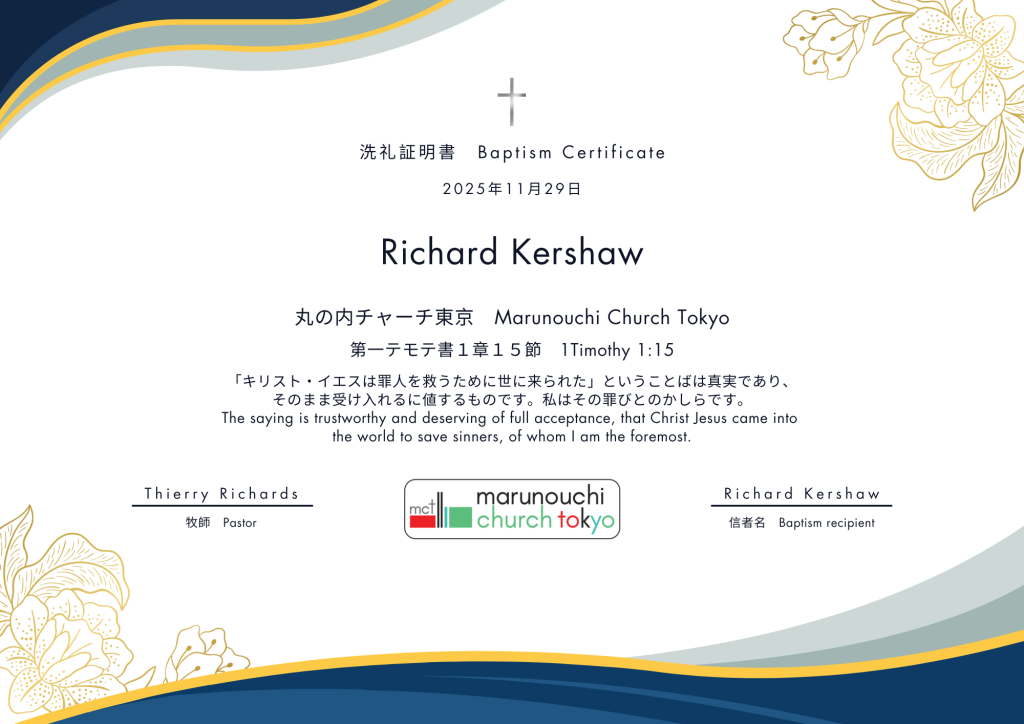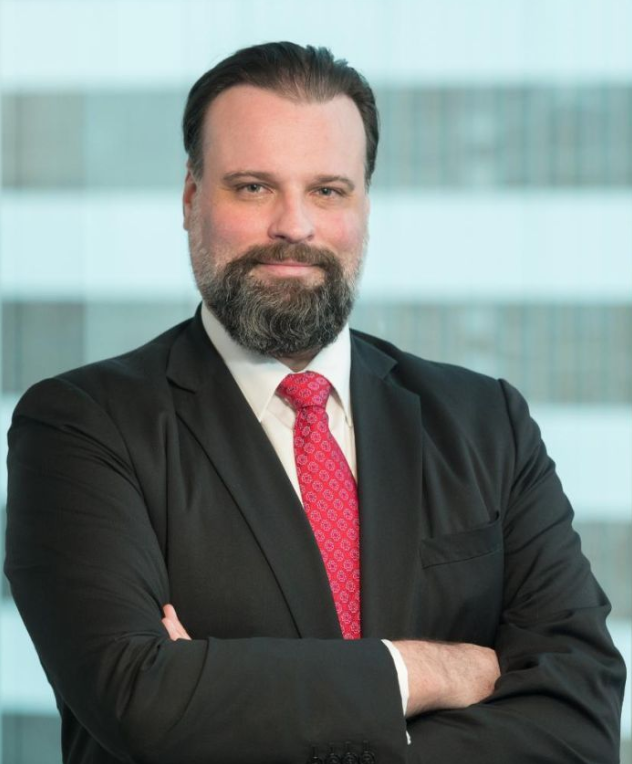
Richard Kershaw
Baptism Testimony
Prior to co-founding my company New Furusato in 2025, I was a technology business leader for over 20 years, establishing and growing businesses and consulting practices in new markets, including Japan, the Hong Kong SAR (Special Administrative Region), Switzerland, and the People’s Republic of China. This included writing strategy, presenting to leadership and company boards, recruiting talent and creating eminence, as well as managing day-to-day operations and P&L (Profit and Loss). My last position was as Asia Pacific forensic technology leader for Deloitte, based in the Tokyo Marunouchi office.
I founded New Furusato (https://newfurusato.jp/) in 2024 to advocate for rural renewal in Japan. I work with communities to identify both new business ideas and cultural assets to preserve and develop. I then support these projects with business planning, attracting investment, and promotion domestically and internationally. I also built a website to help people to visit and enjoy rural Japan (https://visit-shimoina.jp/).
After graduating with a history degree from Oxford University in the UK, I was an assistant English teacher on the JET (Japan English Teaching) programme in southern Nagano Prefecture in the 1990s, which became my ‘second hometown’. This wonderful experience set the course of my life, which is the source of my desire to give back to this and other rural communities.
In his book “Life in the Negative World”, American evangelical author Aaron Renn charts the path from a positive view of Christianity, to one largely neutral, and then finally negative. Being GenX, I grew up in the neutral era, so while I went to a Church of England school, my education regarding Christ was perfunctory and inadequate. The Catholic monk Thomas Merton further saw New Age mysticism as taking our natural desire to seek understanding and turning it inwards into self-justifying self-preoccupation, preventing us from seeking and finding God.
And that, dear friends, was me. While I was never much one for New Ageism, I generally held the view there was “more to this life”, and as long as you were kind of nice it would all work out – what has more recently come to be termed “Moralistic, Therapeutic, Deism”. In short, I was lost without a hint of knowing it. Today, I am fond of the verse in Paul’s first letter to Timothy in Ephesus, 1 Timothy 1:12-13: “I am grateful to Christ Jesus our Lord… even though I was formerly a blasphemer, a persecutor, and a man of violence. But I received mercy because I had acted ignorantly, in unbelief.”
Change came, as if often does, slowly and then with a sharp crescendo. I was living in Hong Kong during COVID-19 and was extraordinarily stressed and worried for my family’s welfare, my marriage continued its pre-existing course to collapse, and my father in the UK suffered a complete mental breakdown. In search of peace, I went hiking, pondering the Tao Te Ching and Stoicism, particularly the works of Marcus Aurelius, which appealed as a system of intellectual vigour focused on the improvement of man’s nature.
Then, I read The Question of God by Harvard Professor Armand Nicholl, juxtaposing the arguments of Sigmund Freud for atheism, countered by C.S. Lewis post-conversion. I had come seeking comfort, but got a pivotal realisation. Lewis noted the Stoic thinks that as death is inevitable, it is unimportant, however to the Christian death is a vital topic: Satan’s initial triumph, and God’s ultimate redemptive tool in the sacrifice of our Lord Jesus Christ. This led to a critical question: What’s this about a fallen world, a redemptive act, and the conquest of death itself?
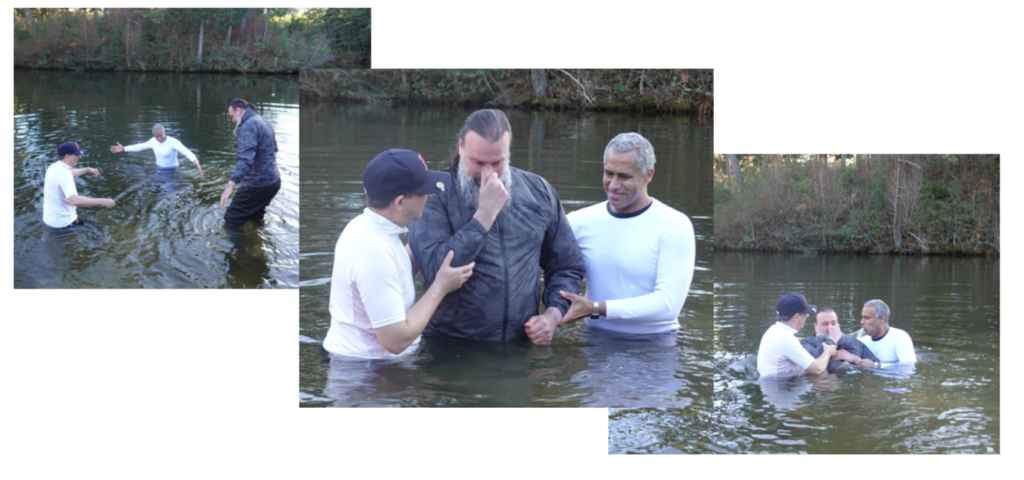
Since then, in Hong Kong, then Tokyo, the Lord has helped me with that question. On moving to Tokyo in October 2022, I sought out a Christian colleague at Deloitte, Kyle Runnels, who introduced me to Thierry, and from there I joined our Marunouchi Office Group (MOG), called Thinking Christianly. This group met in the building just down the road from our Deloitte office in Marunouchi. In my search for understanding, I’ve found great help in works by C.S. Lewis, Thomas Merton, and Fulton Sheen, and even in conversations with my professional mentor, a published cyber security author who originally trained to be a Catholic monk.
I imagine I am not the only Christian who finds explaining their belief journey too dense to summarise easily, not least as my learning is not done and will now be lifelong. First, I considered the world, and concluded there is either a Creator, or it is all a massive coincidence, and the greater our scientific knowledge, the more vanishingly unlikely “coincidence” is. From Creator to Christianity is of course another step. For me, there is the historical and the theological, and in both Christianity’s claims are unique and convincing. Again, I look at the world, and see great evil and cruelty. Christianity’s claims fully explain this: creation, a fall, the corruption of our nature (sin), severance from God, and God acting to save his creation through redemption and renewal. But this redemption is not speculative mysticism. Christianity makes specific claims about events in specific places at specific times, and as has been said many times, if any of those are disproved it all falls apart. It does not, as here again Christianity is unique: witnessed, documented, attested, and carried to the world.
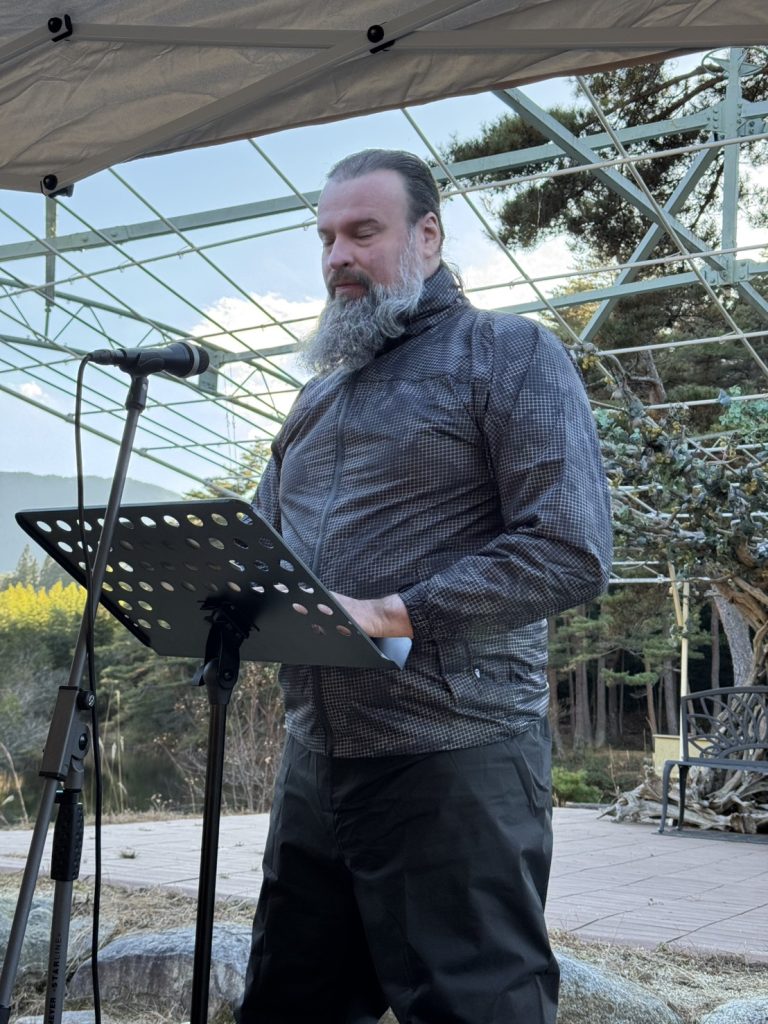
I am here today to publicly profess that faith. I do have issues yet to overcome. I still feel I have to learn more to claim to be Christian. It is in my nature not to lay claim to that which has not been earned, so despite knowing I could not earn redemption, and so God acted to help me as his son redeemed us all, I still struggle with this greatest of gifts that was freely given.
But there is change, I find great encouragement from my fellow Christians, and I find myself thinking more and more about how I can use my position to help others. Most, if not all, of you know that I came back here to Nagano because I wanted to help a place which had once been so kind and supportive to me. I was not expecting to also set about rebuilding myself. I am mindful, hopeful indeed, that my intended purpose here will also be transformed to meeting God’s purpose. I am comforted by a prayer of Martin Luther, that great Reformer, with which I would like to close:
Behold, Lord, an empty vessel that needs to be filled.
My Lord, fill it. I am weak in the faith; strengthen me.
I am cold in love; warm me and make me fervent,
that my love may go out to my neighbour.
I do not have a strong faith; at times I doubt.
O Lord, help me Strengthen my faith and trust in You.
With me, there is an abundance of sin;
in You is the fulness of righteousness.
Therefore I will strive to remain with You.
Amen.