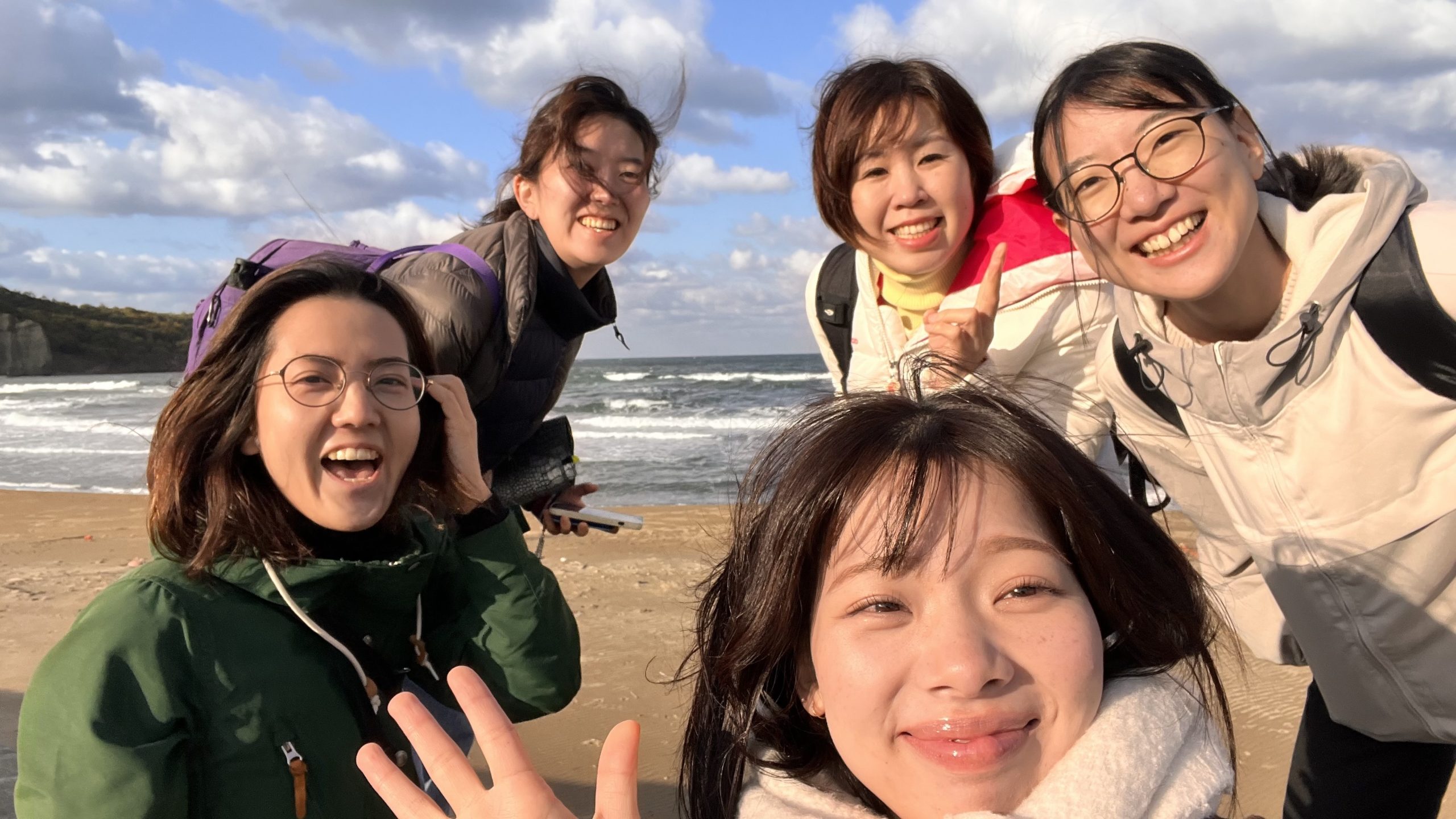
First row: Makoto Kawaguchi and Ayumi Okamura
Second row: Misato Oomori, Kanako Kinjo and Mizuki Nakamura
Kanako Kinjo
Makiminato Central Baptist Church
Okinawa
My name is Kanako Kinjo, and I am participating in the Samurai Projects and working at a church in Okinawa Prefecture. Previously, I worked as a staff member at a prefectural public high school. However, as I faced the struggles of students, I often found myself conflicted by the reality that, due to the principle of separation of religion and state, I was unable to engage with their concerns from a faith-based perspective. Through this struggle, I came to desire to become someone who could share the Gospel freely, without restraint. As a result, I left my job and transferred to Tokyo Christian University.
My studies and experiences at the university were a precious time in which my faith—once vague and undefined—became clearer, and my love for and expectation toward the Lord were greatly deepened. I graduated in March 2025, but my anxieties about working in a church setting did not disappear. While serving at Makiminato Central Baptist Church, I was led to begin the Samurai Projects internship program.
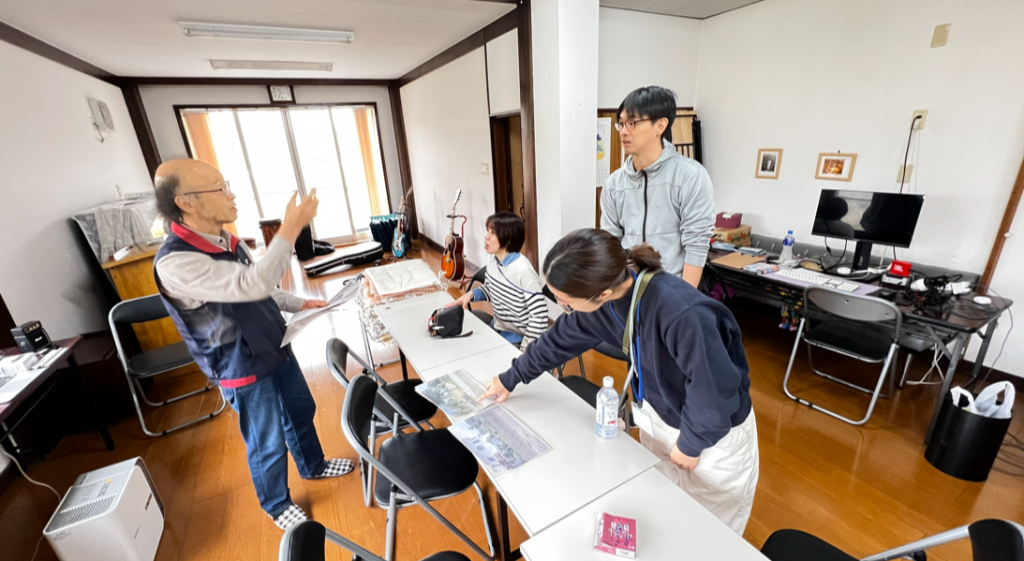
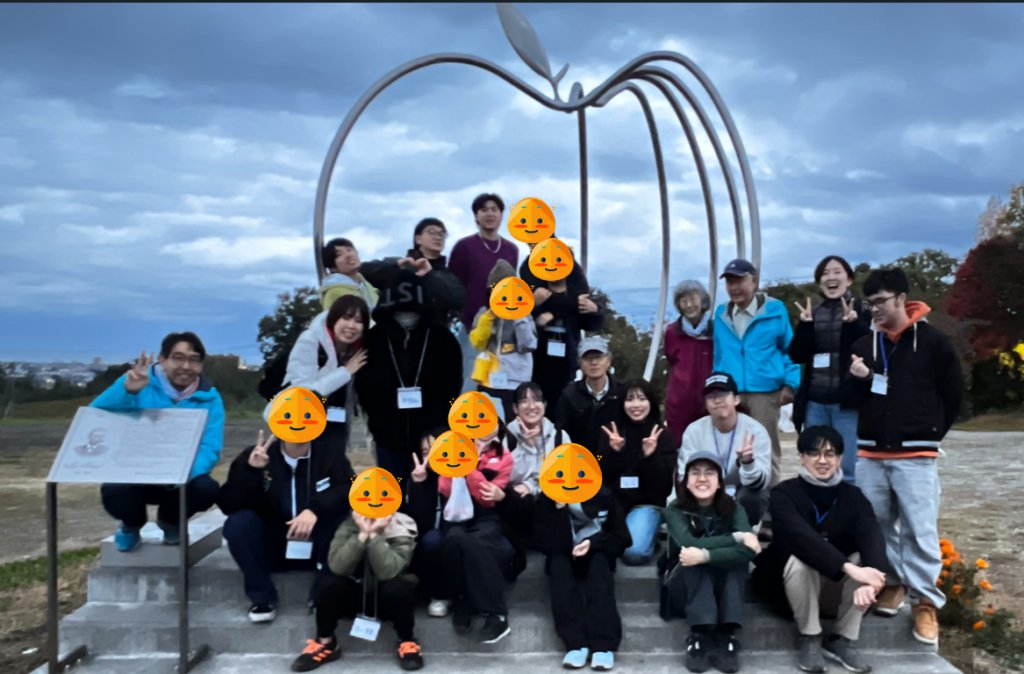
As part of this learning journey, I was given the opportunity to participate in the Samurai Projects 2025 mission trip. Through this experience, I would like to share two blessings that I received. The first blessing was being able to truly experience how our differences with others can become a benefit. The twelve of us Samurai, coming from different backgrounds—having been born and raised in different places and belonging to different generations—we naturally differed in the ways we served and in how we lived together in community. At times on the week-long mission trip, I was confronted with my own weakness, as I found myself judging others by my own standards, wondering why they did things a certain way. Yet it was precisely because of these differences that our mission became broader and richer.
As Scripture says, “Now you are the body of Christ, and each one of you is a part of it” (1 Corinthians 12:27).
There were gifts of worship, gifts of speaking, gifts of connecting with young people, gifts of cooking, gifts of bringing joy to an atmosphere, and many more. As a team in which everyone was needed, we were brought together and used by the Lord. I am deeply grateful for the fellow Samurai with whom I was able to serve.
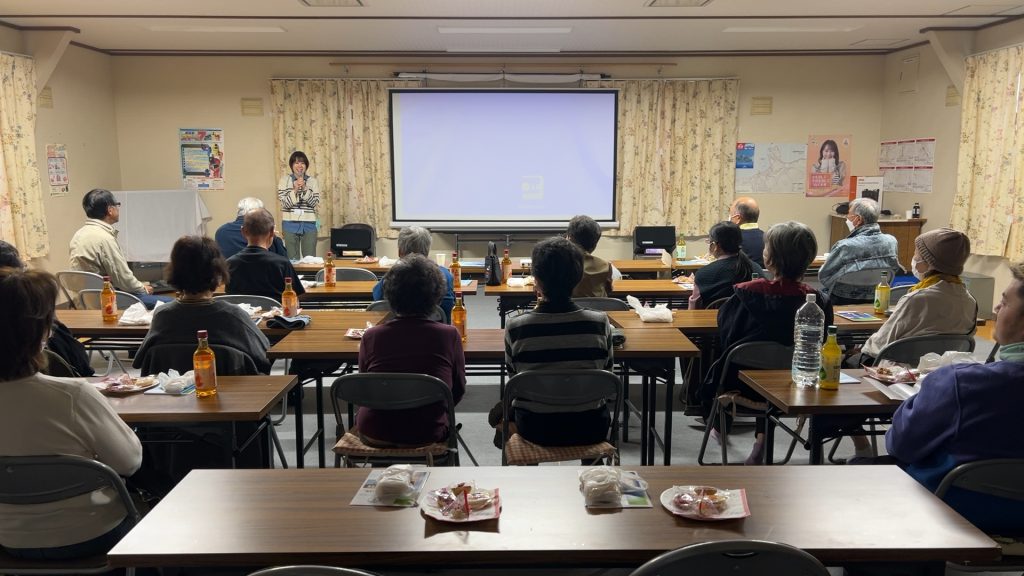
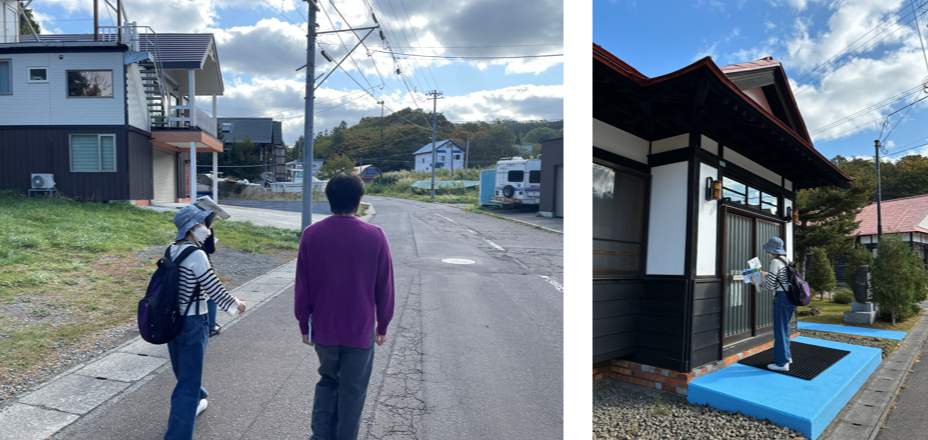
The second fabulous blessing which I received through this mission trip was learning the significance of how the church can contribute to society. I had the privilege of serving at Ranshima Christian Church in Otaru City, Hokkaido. The pastor, Rev. Kitakuni, after many years of pastoral ministry in Saitama Prefecture near Tokyo, planted this church 13 years ago in Rankoshi, an area with very few churches. In this remote area, he established a children’s center, serves as a board member of a nursery school, works as a support staff member at an elementary school, participates in a weekly meal delivery volunteer program, and even belongs to a nursing home himself to build deeper relationships. He also formed a Showa-era (1926-1989) music club (which includes hymns) and made the church toilets freely available to the public, as there are often cyclists going by on a popular cycle route. Through these actions, he demonstrated a posture of first serving the local community.
I was also deeply moved not only by the pastor’s example, but by the church members themselves, who see themselves as representatives of the church and serve as bridges connecting the church with the community.
In addition, I helped with a weekday music gathering at Hiragishi Izumi Church in Sapporo. It is also a church that places great importance on contributing to the local community and is led by Pastor John Newton-Webb and others. Alongside Bible study gatherings, they offer English conversation classes, Korean language classes, a ukulele group, and the Izumi Parent-and-Child Space, fostering open and welcoming relationships with local residents.
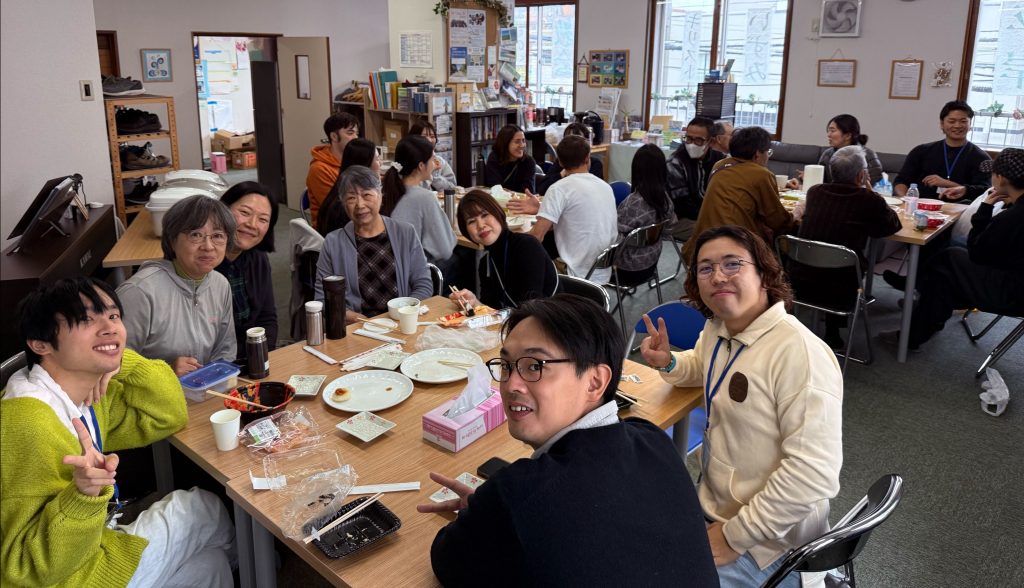
A few years ago, the head of the local shopping district association even requested that the church join the association, saying, “A church that contributes to the community is exactly the kind of church we want as a member.” Since then, the church has been more deeply involved in the area through local festivals, neighborhood cleanups, and other activities.
A few years ago, the head of the local shopping district association even requested that the church join the association, saying, “A church that contributes to the community is exactly the kind of church we want as a member.” Since then, the church has been more deeply involved in the area through local festivals, neighborhood cleanups, and other activities.
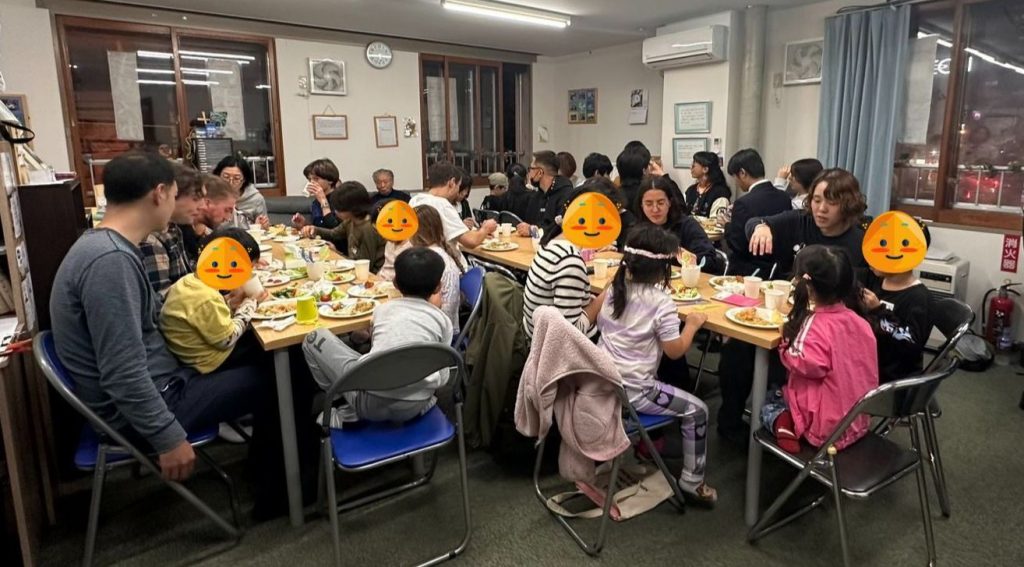
Through these experiences, I was able to see the importance of first showing love and serving the community where we desire to share the Gospel, and then, through those relationships, conveying the love of Christ. As Scripture says,
“In this the love of God was made manifest among us, that God sent his only Son into the world, so that we might live through him. In this is love, not that we have loved God but that he loved us and sent his Son to be the propitiation for our sins. Beloved, if God so loved us, we also ought to love one another.” (1 John 4:9–11).
Just as the Lord showed His love through the redemption of the cross, I too am called to show love to my neighbors. Without this, I have come to believe that the Gospel cannot effectively be spoken. As a result of this mission trip, I hope to apply both the awareness of my own weaknesses and the many lessons I have learned to my future ministry. I am sincerely grateful for being given this opportunity to learn, and for everyone’s prayers and generous support.